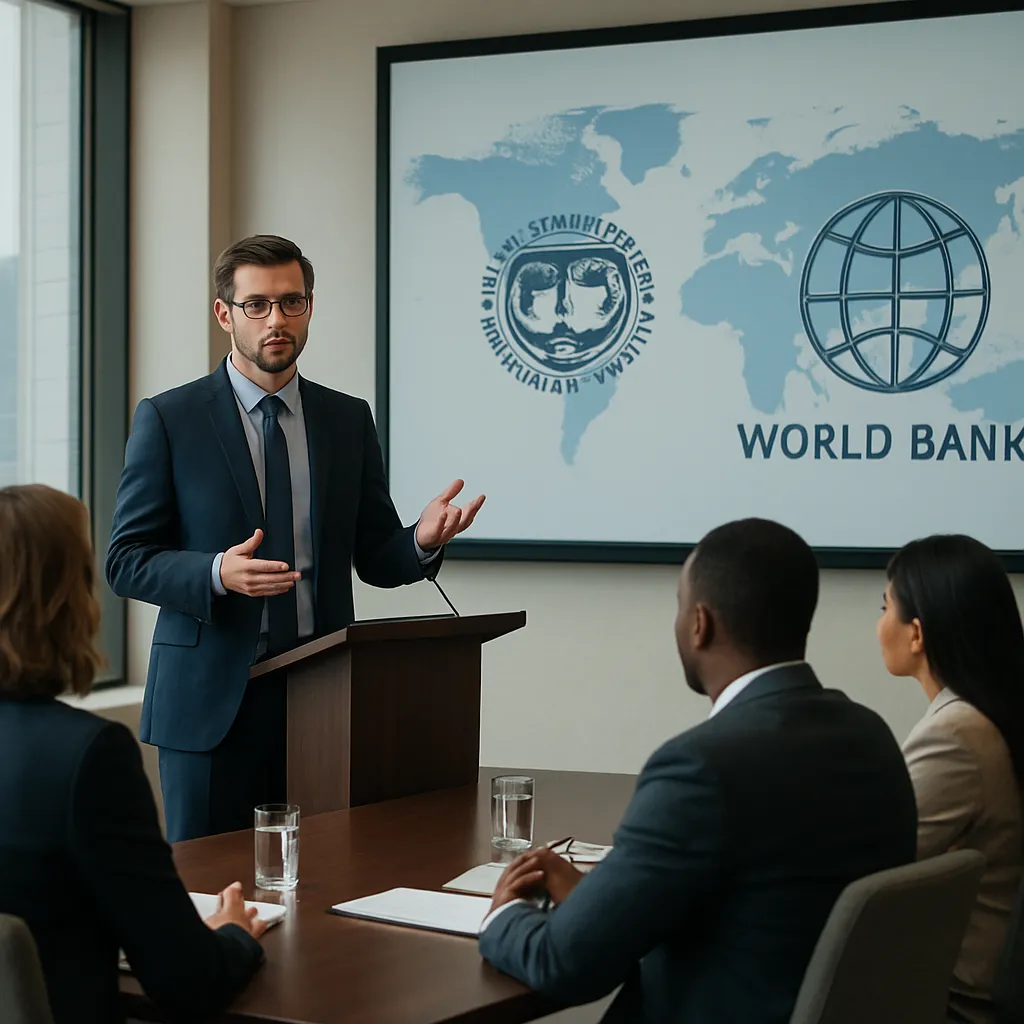
As globalization connects markets and societies more profoundly than ever before, two premier institutions—the International Monetary Fund and the World Bank—stand at the crossroads of economic **stability**, development planning and crisis management. They have evolved from postwar reconstruction agents into multifaceted actors addressing modern challenges such as climate change, digital finance and income inequality across diverse regions.
Historical Foundations of the IMF and World Bank
The origins of both organizations trace back to the 1944 Bretton Woods Conference, where member states sought to prevent a repeat of the Great Depression and global conflict. The IMF was charged with ensuring international monetary **liquidity** and exchange rate stability, while the World Bank focused on funding reconstruction and long-term **infrastructure** projects in war‐torn Europe and beyond. Early loans supported dams, roads and industrial plants that fostered rapid economic expansion.
During the 1950s and 1960s, newly independent nations accessed World Bank credits for building schools and power stations, laying a foundation for human capital and industrial growth. Simultaneously, the IMF provided short‐term balance-of-payments assistance, encouraging fiscal discipline and periodic currency realignment under the fixed‐but‐adjustable Bretton Woods system. Although details differed, both agencies embraced a shared mission: promoting orderly economic relations and reducing barriers to trade and investment.
Adaptation to Contemporary Economic Challenges
Over the past four decades, emerging markets have weathered multiple crises—the Latin American debt meltdown of the 1980s, the Asian financial crisis of 1997, the Russian default in 1998 and the global recession of 2008. In each episode, the IMF’s **resilience** engineering and rapid financing facilities sought to restore confidence and prevent contagion, often in coordination with other multilateral lenders. Meanwhile, the World Bank reoriented its agenda toward poverty alleviation, human development and institutional **governance**, supporting policy reforms and social safety nets in vulnerable communities.
The 2008 meltdown prompted a major overhaul: the IMF expanded its lending toolkit, introduced contingent credit lines and strengthened surveillance of systemically important economies. The World Bank Group, too, created the International Development Association for concessional funding and the International Finance Corporation for private‐sector growth. This diversification of instruments and partners illustrated a newfound emphasis on financial innovation, risk management and inclusive outcomes.
Shaping Sustainable Development and Poverty Reduction
A growing awareness of environmental risks and social disparities has steered both institutions toward a sustainable growth paradigm. The World Bank’s commitment to the UN Sustainable Development Goals led to an emphasis on renewable energy, climate-resilient agriculture and gender equality. Projects now integrate early warning systems for natural disasters, microfinance for women entrepreneurs and vaccination programs in remote areas.
Likewise, the IMF has sharpened its focus on climate shock preparedness, inequality monitoring and the fiscal effects of carbon pricing. Through Article IV consultations, its economists advise member governments on combining sound macroeconomic policy with green investments. By promoting carbon taxation and phasing out fossil fuel subsidies, the IMF champions long-term **sustainability** while safeguarding public finances.
Innovation in Financial Instruments and Partnerships
Technological breakthroughs and changing demographics have inspired novel funding mechanisms. The World Bank has pioneered the issuance of green bonds, social impact bonds and pandemic emergency financing. These products attract investors seeking both returns and measurable social or environmental impact. Meanwhile, the IMF collaborates with regional financial arrangements—such as the European Stability Mechanism and the Chiang Mai Initiative—to multiply crisis response capacity.
Digital finance has also prompted new considerations: central bank digital currencies, cross-border payment platforms and cybersecurity standards. Both institutions conduct research on fintech’s macroeconomic implications, offering guidance to central banks on regulation and oversight. This forward-looking stance underscores their role not just as lenders, but as thought leaders in global economic **innovation**.
Critiques and Calls for Reform
Despite notable achievements, the IMF and World Bank face persistent criticism. Observers often point to stringent conditionality attached to IMF loans, arguing that abrupt austerity measures can undermine social programs and stifle growth. Critics of World Bank projects raise concerns about displacement of local communities, environmental degradation and excessive reliance on large‐scale construction.
Efforts at internal reform seek to address these issues. The IMF has introduced more flexible policies for low-income members, reducing conditionality and integrating social protections into program design. The World Bank has strengthened its environmental and social safeguards, increased community consultation and improved transparency in procurement. Nonetheless, the debate over balancing efficiency, accountability and local ownership continues to shape the architecture of multilateral lending.
Looking Ahead: New Frontiers in Global Governance
As geopolitical tensions rise and economic fragmentation risks grow, the IMF and World Bank must reaffirm their relevance. Strengthening representation of emerging economies on executive boards and enhancing voice for the Global South are critical steps. The architecture of global **governance** may also evolve to include climate banks, digital currency boards and pandemic response funds.
Moreover, forging deeper partnerships with regional development banks, philanthropic foundations and private-sector consortia can mobilize diverse resources. By leveraging data analytics, satellite monitoring and real-time economic indicators, these institutions can anticipate shocks more precisely and deploy countermeasures more swiftly. Their capacity to convene sovereign borrowers, creditors and civil society actors remains a pivotal advantage in coordinating complex global initiatives.
Ultimately, the IMF and World Bank continue to underpin the framework for collective action on cross-border challenges. Through adaptive strategies, commitment to **development** effectiveness and readiness to innovate, they play an indispensable role in safeguarding economic prosperity and promoting equitable growth. Their continued evolution will determine whether the promise of a more resilient, inclusive and sustainable global economy becomes reality.