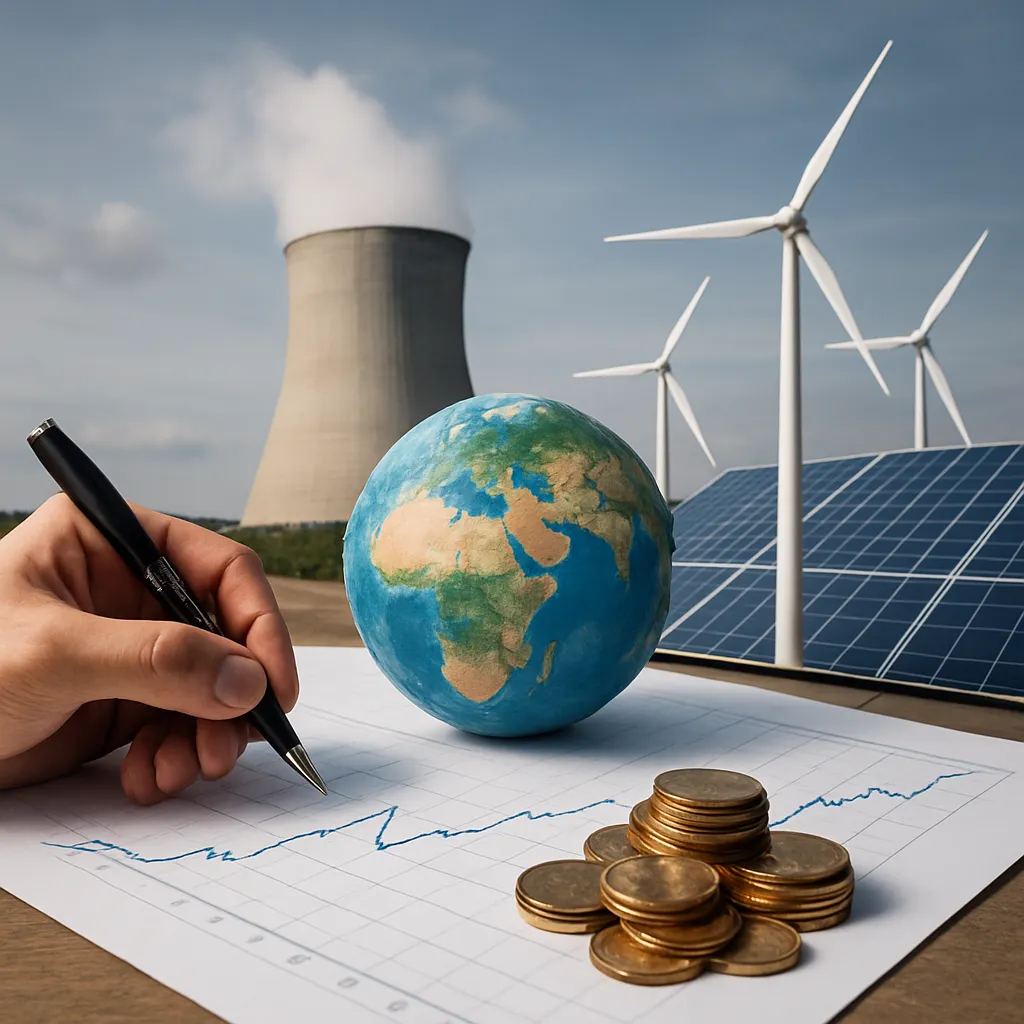
The interplay between global growth, sustainability, and the shift toward low-carbon sources has become a defining feature of the modern world economy. As nations seek to balance economic expansion with environmental stewardship, the Economics of Energy Transition emerges as a critical lens for understanding investment flows, policy design, and market dynamics. This article examines key drivers, obstacles, and frameworks shaping how countries navigate the complex path toward a cleaner, more resilient energy system.
Drivers of Economic Growth in Energy Transition
Technological Innovation and Cost Declines
The rapid pace of breakthroughs in solar panels, wind turbines, and battery storage has dramatically lowered the levelized cost of energy. Continuous research and development foster greater efficiency across manufacturing processes, driving down prices and making renewable sources viable at scale. As firms deploy advanced materials and digital monitoring systems, economies of scale further amplify cost reductions. The rising affordability of green technologies propels demand, attracting new players and stimulating domestic investment.
Market Expansion and Job Creation
Shifting from fossil-based power generation creates entire ecosystems of suppliers, installers, and maintenance providers. Studies indicate that per unit of energy generated, solar and wind sectors generate more jobs than coal or gas. This dynamic encourages governments to craft supportive industrial policies, linking local content requirements to tender awards. In regions preparing skilled workforces, the transition fuels a virtuous cycle of higher employment, technology adoption, and gross domestic product growth.
Capital Flows and Financial Innovation
- Green bonds and sustainability-linked loans facilitate access to low-cost financing for renewable projects.
- Public–private partnerships blend concessional capital with commercial funding to de-risk large-scale grid upgrades.
- Insurance and derivative markets evolve to cover weather risks and long-term price fluctuations, stabilizing returns.
By mobilizing both institutional investors and retail savers, financial markets play a pivotal role in channeling resources toward low-carbon infrastructure. Regulations that mandate disclosure of climate-related risks foster transparency and guide capital into environmentally aligned assets.
Challenges and Barriers to Equitable Transformation
Infrastructure Gaps and Grid Integration
Many countries still rely on aging transmission networks unable to accommodate variable power flows from wind and solar. Upgrading these lines demands substantial upfront expenditure and lengthy permitting processes. In emerging markets, limited budgetary room and institutional capacity shortfalls hinder the deployment of smart grid technologies and energy storage facilities that smooth intermittency and enhance system stability.
Regulatory Complexity and Policy Uncertainty
Frequent reversals of subsidy programs or abrupt tariff adjustments create investment risks, discouraging both local and foreign capital. A coherent, long-term policy framework is essential to signal commitment to decarbonization and justify the high initial costs of renewable infrastructure. Inconsistent enforcement of environmental regulations further undermines public trust and deters private-sector participation.
Social Equity and Access Concerns
While the energy transition promises widespread environmental benefits, it can exacerbate inequality if not managed inclusively. Rural and low-income communities may face higher energy tariffs or reduced access during network restructuring. Ensuring equity requires targeted subsidies, community-driven microgrid initiatives, and workforce retraining programs to support workers displaced from traditional fossil-fuel industries.
Policy Mechanisms and International Cooperation
Carbon Pricing and Decarbonization Incentives
Putting an explicit price on greenhouse gas emissions ranks among the most efficient means of aligning private incentives with social welfare. Cap-and-trade systems and carbon taxes create a clear cost signal, encouraging firms to innovate and reduce carbon footprints. Revenues generated can be recycled to fund renewable energy auctions or to cushion vulnerable households from price hikes.
Subsidy Reform and Fossil-Fuel Phase-Out
Eliminating regressive fossil-fuel subsidies unlocks fiscal resources while discouraging wasteful consumption. Redirecting savings toward renewables accelerates the build-out of clean energy capacity. Transparent and predictable subsidy phase-out schedules help industries adjust investment plans and maintain energy security during the transition period.
Multilateral Platforms and Development Finance
- International Climate Funds support adaptation and mitigation in developing economies.
- Multilateral Development Banks offer blended finance instruments to mobilize private capital for large-scale renewables and grid modernization.
- Technical assistance programs build local institutional capacity for project appraisal and environmental safeguards.
Collaborative frameworks such as the Green Climate Fund and mission-based alliances facilitate knowledge-sharing, standard-setting, and coordinated action, reducing fragmentation and duplication of efforts across borders.
Case Studies and Regional Perspectives
Asia-Pacific’s Leapfrogging Opportunities
Rapid urbanization and rising energy demand in the Asia-Pacific region present both challenges and opportunities. Countries like India and Vietnam have leveraged auction-based schemes and solar parks to achieve record low tariffs. Meanwhile, investments in large-scale pumped-hydro storage and cross-border interconnections aim to balance supply variability. Public incentives and domestic manufacturing policies further foster a competitive clean-energy sector.
Africa’s Path to Resilience and Access
With a significant share of its population off-grid, sub-Saharan Africa embraces decentralized renewable solutions. Pay-as-you-go solar kits, coupled with mobile finance platforms, have transformed energy access in remote areas. Regional power pools and shared transmission corridors seek to integrate variable renewables, fostering both transformation and social development in energy-poor regions.
European Union’s Policy Leadership
The EU Green Deal ties economic recovery to ambitious emissions reductions, embedding circular-economy principles across all sectors. Carbon border adjustment mechanisms and industrial decarbonization roadmaps underscore Europe’s commitment to global competitiveness under stricter environmental standards. Investment in hydrogen infrastructure and carbon capture projects highlights the bloc’s role as a testbed for advanced decarbonization pathways.
Future Outlook and Strategic Imperatives
Realizing the full potential of the energy transition demands a holistic approach that integrates economic, environmental, and social objectives. Priorities include accelerating research into next-generation storage, fostering interconnection across regions, and strengthening the resilience of supply chains. Governments must craft policies that incentivize circular resource use and embed climate risks into fiscal planning.
As global markets evolve, sustaining momentum requires maintaining investor confidence through clear regulation, transparent processes, and predictable pricing signals. Public engagement and participatory governance ensure that infrastructure projects reflect community needs and build societal support. The interplay between national strategies and multilateral cooperation will define the pace of progress in the decades ahead, charting a course toward an inclusive, low-carbon global economy.