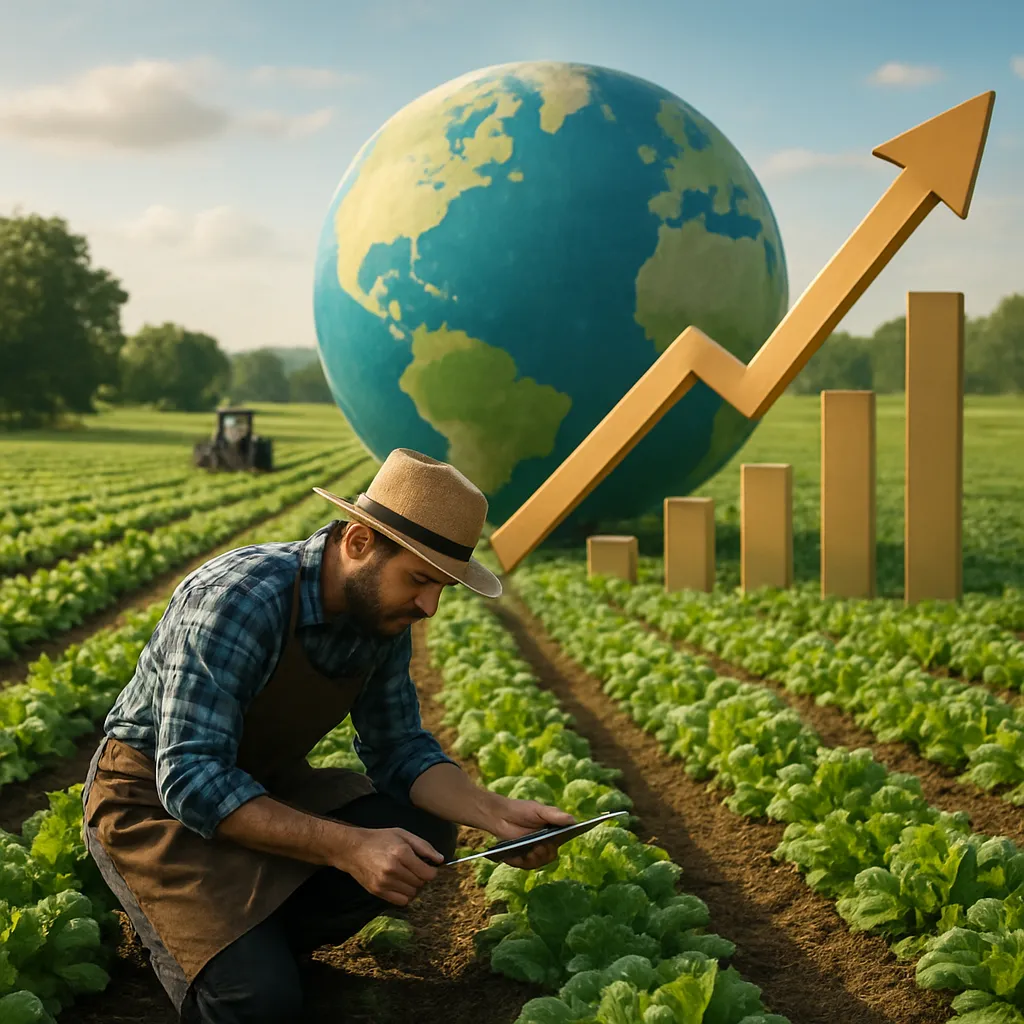
The global agricultural sector stands at a pivotal intersection of environmental stewardship and economic ambition. As nations grapple with the dual challenges of feeding a growing population and mitigating climate risks, the adoption of sustainable farming models emerges as a cornerstone for long‐term prosperity. By balancing resource conservation with market demands, these approaches can catalyze widespread economic development and foster resilient communities worldwide.
Integrating Sustainable Practices with Economic Objectives
Traditional agriculture often prioritizes short‐term yield maximization at the expense of soil health and biodiversity. In contrast, sustainable farming systems emphasize crop rotation, agroforestry, and organic amendments to build fertile ground over successive seasons. These methods not only preserve the natural resource base but also reduce dependency on expensive chemical inputs, enhancing farm-level profitability in the long run.
Governments and private stakeholders are recognizing that aligning agricultural subsidies and incentives with sustainability criteria can drive broader market transformation. For example, payment-for-ecosystem-services schemes reward farmers for practices that promote carbon capture and water retention. Such programs channel investment into regenerative approaches, creating new revenue streams and strengthening rural livelihoods.
Market Incentives and Certification
- Eco‐labeling standards, such as Rainforest Alliance and Fair Trade, help consumers identify products linked to ethical farming.
- Public‐private partnerships can underwrite the certification costs for smallholders, expanding access to high‐value export markets.
- Price premiums for sustainably produced commodities encourage widespread adoption of low‐input techniques.
Technological Innovations and Productivity Gains
Embracing modern tools is essential for reconciling sustainability goals with the demand for increased agricultural output. Precision farming technologies—driven by satellite imagery, drone surveillance, and Internet of Things (IoT) sensors—enable real-time monitoring of crop health, soil moisture, and nutrient levels. This data-driven approach optimizes resource allocation, reduces wastage, and bolsters overall productivity.
Biotechnological advancements are also reshaping the sector. Drought-resistant and pest-tolerant crop varieties, developed through conventional breeding or gene-editing, can thrive under stressful environmental conditions. These innovations enhance farm-level resilience and mitigate the risk of yield losses, contributing to global food security.
Digital Platforms and Farmer Empowerment
- Mobile-based advisory services deliver tailored agronomic guidance to remote farming communities.
- Blockchain-enabled supply chains improve traceability, reducing fraud and ensuring fair compensation for producers.
- Digital credit scoring, using agricultural performance data, increases access to financing for smallholder enterprises.
Ecosystem Services and Climate Resilience
Healthy ecosystems play a vital role in buffering agricultural systems against climatic shocks. Practices such as cover cropping, conservation tillage, and integrated pest management enhance soil structure and foster biodiversity. These measures not only maintain crop yields but also support critical functions like pollination and carbon sequestration.
By valuing these ecosystem services within economic frameworks, policymakers can craft targeted interventions that reward conservation. For instance, carbon markets that recognize soil organic carbon gains incentivize farmers to adopt no‐till and perennial cropping systems. This approach merges environmental objectives with tangible financial returns, driving wider uptake of climate-smart methodologies.
Moreover, the restoration of degraded landscapes—through reforestation or wetland rehabilitation—can reduce vulnerability to droughts and floods. As extreme weather events become more frequent, integrating nature-based solutions into agricultural planning enhances both on‐farm resilience and regional stability.
Financing, Policy, and Global Partnerships
Scaling sustainable agriculture to meet global demand necessitates a robust financial architecture and harmonized policy environment. Multilateral development banks and impact investors are increasingly allocating capital to climate-resilient agribusiness ventures. Blended finance models, which combine concessional funds with private equity, lower investment risk and unlock substantial pools of capital for green initiatives.
Policy Interventions at the national and international levels are equally crucial. Subsidy reform can redirect public funds away from environmentally harmful practices towards low-emission, resource-efficient technologies. Tariff adjustments and trade agreements that favor sustainably certified goods also encourage producers to adopt best practices.
International Collaboration
- Global research networks facilitate knowledge transfer of climate-adaptive crop varieties and agroecological frameworks.
- Regional trade blocs can harmonize standards, reducing non‐tariff barriers for sustainably produced commodities.
- Technical assistance programs support capacity-building in regulatory agencies and extension services.
Ultimately, forging strategic alliances among governments, corporations, non-governmental organizations, and farming communities lays the groundwork for a resilient and inclusive food system. By embedding innovation at every level—from seed development to supply chain logistics—sustainable agriculture can emerge as a key driver of global economic growth.