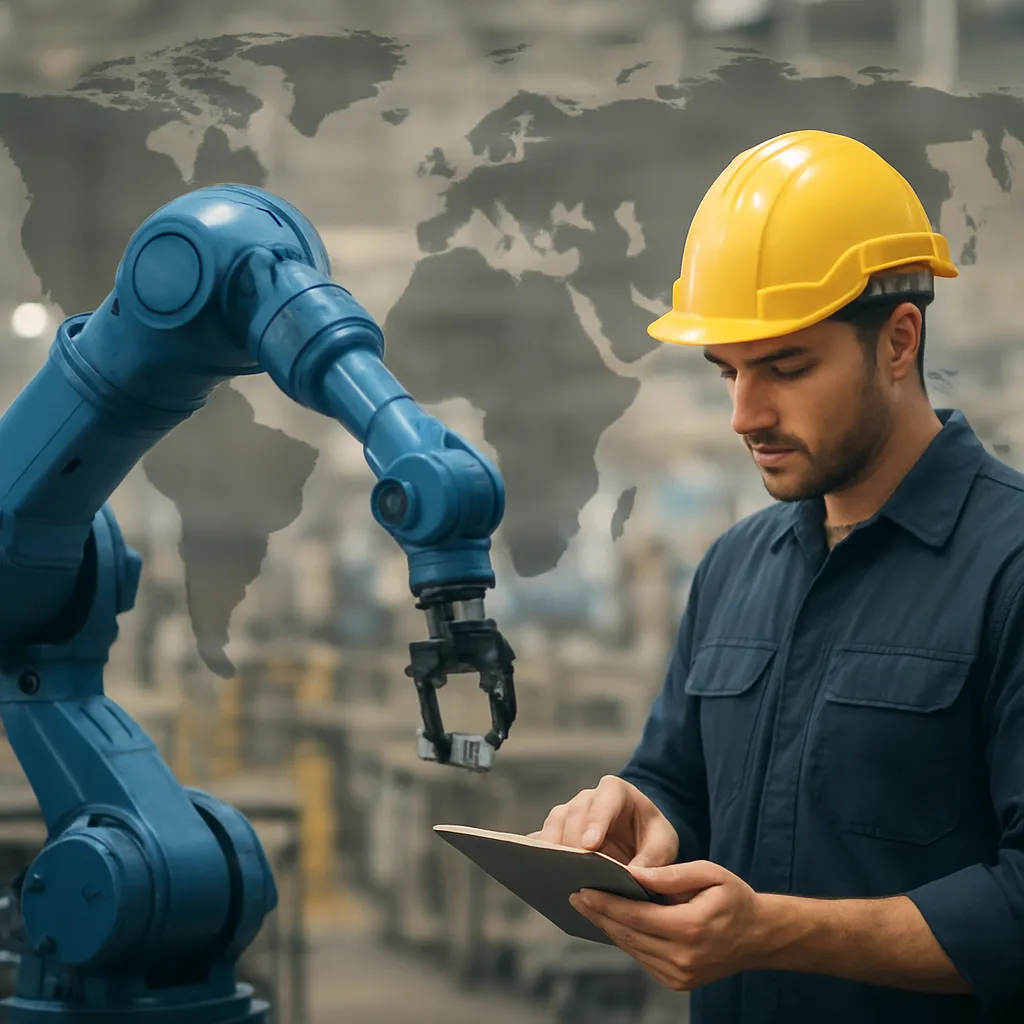
The rapid integration of automation technologies is reshaping the structure of work across continents, altering how businesses operate and how employees engage in their careers. As industries pivot towards advanced machinery and software solutions, the interplay between human labor and intelligent systems creates both opportunities and challenges. This exploration delves into key facets of the transformation, from workforce implications to strategic responses, highlighting trends that define the modern global economy.
Impacts on Employment Patterns
Automation-driven change affects employment by introducing new tasks and rendering certain roles obsolete. Although routine manual and clerical jobs are most vulnerable, technology also spawns entire categories of work that never existed before. The phenomenon of displacement coexists with job creation, producing a dynamic labor market in which adaptability is paramount.
Multiple studies have quantified the degree to which different occupations will be affected. Estimates suggest that nearly 30–40% of tasks performed in today’s workforce could be automated within the next two decades. Key sectors experiencing the first wave include manufacturing, logistics, and customer support. In contrast, creative industries, research, and high-level management remain more resilient due to their reliance on complex judgment and interpersonal skills.
Emerging roles emphasize the synthesis of human insight and machine capability. Data annotation, algorithm auditing, and robotics maintenance are prime examples. Workers who acquire competencies in digital literacy, critical thinking, and cross-disciplinary collaboration often enjoy enhanced employability. Bridging the skills gap is thus a central priority for organizations seeking to thrive in an automated era.
Beyond numerical shifts, job quality and work-life balance undergo transformation. Some employees experience relief from monotonous tasks, reallocating time to higher-order problem solving. Others face pressure to meet new performance metrics tied to machine-driven efficiency. The net effect on worker well-being depends on corporate culture, regulatory frameworks, and the availability of retraining programs.
Industry Adaptation and Technological Diffusion
Sectoral Variation in Automation Uptake
Adoption rates of advanced technologies vary widely across industries due to differences in capital intensity, regulatory regimes, and the complexity of human interactions required. In heavy manufacturing, industrial robotics have achieved near-mass-market penetration, enabling 24/7 operations with minimal human intervention. In agriculture, automated harvesters and drones optimize yield monitoring and resource application. The logistics sector leverages autonomous guided vehicles and AI-powered route optimization to reduce lead times and transportation costs.
Conversely, service-oriented fields such as education, healthcare, and hospitality tend to integrate automation more cautiously. Telemedicine platforms, virtual learning environments, and self-service kiosks represent incremental steps rather than wholesale transformation. Stakeholders juggle considerations related to patient trust, pedagogical quality, and customer experience, which often resist full automation.
Innovation Ecosystems and Global Collaboration
The diffusion of automation is propelled by robust innovation ecosystems, where startups, research institutions, and multinational corporations exchange ideas and resources. Open-source software communities, international trade agreements, and cross-border research consortia accelerate the spread of best practices. This global network shapes standards, ensuring interoperability and security in complex supply chains.
Collaboration across geographies also facilitates talent mobility. Engineers specializing in machine learning and mechatronics increasingly relocate or contribute remotely to leading research hubs. While this enhances knowledge transfer, it can exacerbate regional disparities if certain economies struggle to retain or cultivate specialized skills.
To mitigate such imbalances, public and private actors sponsor training centers and innovation clusters in underrepresented regions. These initiatives aim to widen access to cutting-edge education, fostering local capabilities in emerging technologies. Over time, the synergy between global players and grassroots innovators promotes a more balanced distribution of productive capacity.
Policy and Workforce Development Strategies
Governments and industry leaders are designing frameworks to harness the benefits of automation while safeguarding social well-being. Three principal strategies emerge: upskilling and reskilling, social safety nets, and regulatory guidelines for ethical technology deployment.
Upskilling and Reskilling Initiatives
- Public-private partnerships fund vocational programs targeting industries with high automation potential.
- Online learning platforms offer modular courses in data analysis, AI fundamentals, and robotics programming.
- Apprenticeship schemes blend on-the-job training with classroom instruction, easing transitions for mid-career workers.
Effective initiatives align curricula with real-world demands, ensuring that graduates possess relevant competencies. Continuous learning becomes not just a benefit but a necessity, as technological cycles accelerate and new tools emerge frequently.
Social Safety Nets and Labor Market Flexibility
Automation’s disruptive potential has prompted debate on wage insurance, universal basic income, and portable benefits schemes. Policymakers explore hybrid models that combine unemployment support with incentives for rapid re-employment. Enhanced healthcare coverage and retirement planning, decoupled from single-employer dependency, contribute to a more resilient workforce.
Labor regulations are also evolving to accommodate nontraditional work arrangements. Gig platforms and remote roles require frameworks that guarantee fair compensation, safe working conditions, and collective bargaining rights. Striking a balance between flexibility and protection remains a complex policymaking challenge.
Ethical and Regulatory Considerations
Automated systems raise questions about privacy, bias, and accountability. In response, agencies worldwide propose guidelines that mandate transparency in algorithmic decision-making. Ethical review boards and certification processes help ensure that AI applications comply with human rights principles. Moreover, international cooperation on standards prevents a regulatory “race to the bottom,” promoting shared values in technology governance.
Proactive regulation can stimulate sustainability by encouraging energy-efficient hardware and circular-economy approaches to electronic waste. Incentives for green automation solutions steer investments toward environmentally responsible designs, aligning industrial progress with climate goals.
Shaping the Future Workforce
The intersection of globalization and automation compels businesses and workers to embrace continuous adaptation. Multinational companies leverage digital platforms to coordinate dispersed teams, tapping into diverse talent pools. Cultural agility and effective communication become as vital as technical proficiency.
Educational institutions respond by fostering interdisciplinary programs that merge STEM disciplines with humanities, emphasizing ethical reasoning and creative problem solving. Project-based learning and industry collaboration ensure that students engage with real automation challenges early in their careers.
Ultimately, the evolving labor landscape underscores a simple truth: technology alone cannot generate inclusive prosperity. Human ingenuity, grounded in empathy, ethics, and community engagement, remains the cornerstone of any sustainable economic model. Through strategic collaboration and forward-looking policies, societies can steer the automation revolution toward shared prosperity and enduring growth.