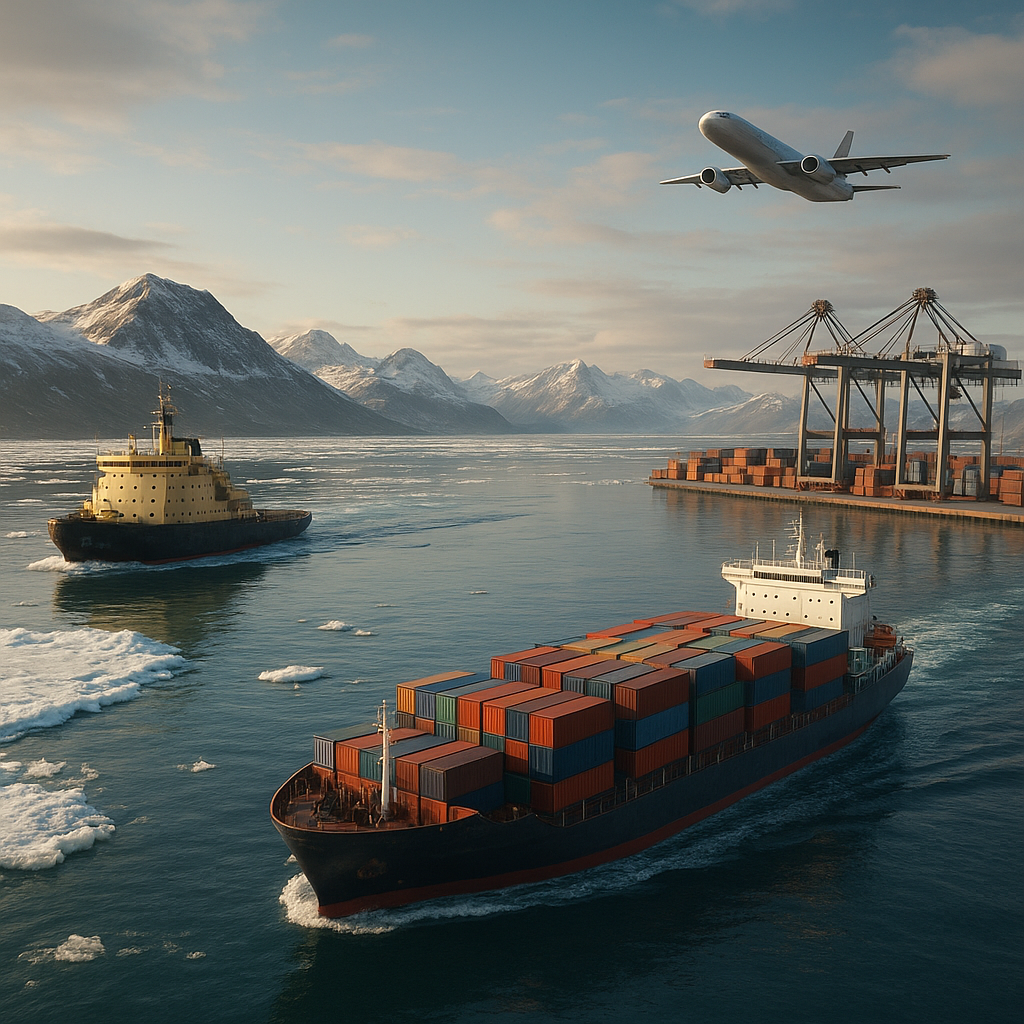
The transformation of global trade networks is reshaping the dynamics of supply chains, national economies, and geopolitical ties. As emerging corridors carve new pathways through ice, over digital frontiers, and across deep oceans, stakeholders must adapt strategies to harness opportunities and mitigate risks. This article examines three pivotal arenas—Arctic routes, traditional maritime lanes, and beyond—highlighting their economic, strategic, and environmental implications.
Northward Expansion: Opening the Arctic Corridor
Melting sea ice and advances in navigation technology are unlocking the Arctic as a viable passage between Europe and Asia. The Northern Sea Route (NSR) offers a path that is up to 40% shorter than the Suez Canal alternative, reducing transit times and fuel consumption. Yet realizing this potential demands significant investment in infrastructure and risk management, as harsh weather and shifting sovereignty claims complicate operations.
Infrastructure and Investment Needs
Developing ports, search-and-rescue stations, and oil spill response capabilities are critical to sustain Arctic traffic. Key requirements include:
- Icebreaker fleets equipped with cutting-edge propulsion systems
- Year-round deep-water ports to facilitate cargo transfers
- Satellite-based navigation and real-time ice monitoring
Governments and private investors are channeling funds into these projects, betting on future cargo volumes that can justify high capital expenditure.
Geopolitics and Sovereignty
Several Arctic states—including Russia, Canada, and Norway—assert territorial claims and regulatory control over adjacent waters. The concept of the Arctic as a global commons competes with national ambitions to secure resource rights and military outposts. As commercial vessels venture further north, diplomatic agreements will shape:
- Search-and-rescue coordination frameworks
- Environmental protection standards
- Customs and tariff regimes
Balancing sovereignty interests with free navigation principles will define the future of Arctic trade.
Reinvention of Conventional Maritime Routes
While Arctic passages garner headlines, traditional sea lanes via the Suez, Panama, and Malacca straits remain the workhorses of global commerce. Container shipping, bulk carriers, and oil tankers still follow these channels, though efficiencies and vulnerabilities are under scrutiny.
Efficiency and Resilience
Recent disruptions—from the Ever Given blockage in the Suez Canal to the pandemic’s port shutdowns—have exposed the fragile resilience of tightly optimized networks. Companies are now pursuing a balance between just-in-time deliveries and diversified routing strategies. Approaches include:
- Multi-port agreements to reroute cargo during crises
- Onshore and near-shore warehousing to buffer delays
- Real-time data analytics for dynamic voyage planning
Environmental and Regulatory Pressures
Mounting concerns about carbon emissions and marine pollution are propelling stricter greenhouse gas standards for ships. The International Maritime Organization (IMO) has set targets to reduce total annual GHG emissions by at least 50% by 2050 compared to 2008 levels. Stakeholders are responding by:
- Developing alternative fuel vessels (LNG, hydrogen, ammonia)
- Upgrading hull designs for improved hydrodynamics
- Implementing slow-steaming protocols
Such measures not only lower the carbon footprint but also reshape cost structures and competitive dynamics in maritime logistics.
Digital Highways and Emerging Frontiers
Beyond physical waterways, digital corridors are emerging as crucial arteries for trade in services, data, and finance. Cloud computing, e-commerce platforms, and blockchain-enabled supply chain solutions are redefining the concept of a “route.”
Data as Cargo
In a digitally interconnected world, data flows underpin cross-border transactions. Tech hubs in Singapore, Dubai, and Ireland illustrate how robust digital infrastructure can attract global investment. Key enablers include:
- High-capacity subsea cables for low-latency connectivity
- Edge computing nodes to process data closer to end users
- Regulatory sandboxes for fintech innovation
Control over these digital pathways translates into economic leverage and national competitiveness.
New Geographic Frontiers
Logistics is also venturing into nontraditional terrains: transcontinental rail corridors (the Belt and Road Initiative), space-based delivery concepts, and drone networks in remote regions. These developments hinge on:
- Public-private partnerships to fund large-scale projects
- Harmonized customs and cross-border data-sharing protocols
- Robust cybersecurity measures to protect critical supply chains
Exploring these pathways requires overcoming environmental, technical, and geopolitical hurdles, but the payoff could be revolutionary connectivity.
Challenges and Strategic Imperatives
The evolving tapestry of trade routes presents a set of complex challenges. Stakeholders must navigate the intersection of climate change, sustainability imperatives, and shifting alliances. Key strategies include:
- Diversification of sourcing and routing to hedge against disruptions
- Investment in innovation—from green shipping to AI-driven logistics
- Collaboration on international standards to ensure fair competition
- Strengthening local supply chains to enhance resilience and market access
Ultimately, the future of trade will be defined by the ability of nations and corporations to adapt flexibly, forge new partnerships, and balance growth with environmental stewardship. As new corridors emerge—on ice, water, and in the digital realm—the global economy stands at the threshold of a transformative era of interconnectivity.